
The WARDOGS Cash Economy
Answer
You start every match with $10,000 and buy a fresh loadout out of your balance before every single life. Money is earned by playing for the team — BULKHEAD has confirmed that reviving allies, holding the Control Zone, transporting team-mates and running supplies all pay, alongside kills. Dying costs you the equipment you were carrying, not your banked balance. The fastest route to a tank or a helicopter is a few cheap, productive infantry lives, not an expensive gamble on life one.
On this page
How the economy works
WARDOGS replaces the persistent unlock progression most large-scale shooters use with a per-match economy. There is no weapon you have to grind fifty hours to access. There is a buy screen, a balance, and a price list.
| Rule | Detail |
|---|---|
| Starting balance | $10,000 for every player, every match |
| When you buy | Before every life, at the buy screen |
| What is bought | Weapons, gear, utilities and vehicles — everything |
| What is free | Nothing after the opening balance |
| On death | You lose the loadout you were carrying; your remaining balance stays |
| Between matches | The balance does not carry over. Every match resets to $10,000 |
The design consequence is that your role is a spending decision rather than a class selection. Buy a medical kit and you are the medic. Buy a helicopter and you are the pilot. Buy building tools and you are the engineer. This is covered in more depth on the loadouts page.
What pays, and roughly how much
The developer's confirmed list of paying actions:
| Action | Status | Notes |
|---|---|---|
| Reviving allies | Confirmed paid | Named explicitly by BULKHEAD as an example of teamplay income |
| Objective / zone control | Confirmed paid | Holding and contesting the Control Zone pays as well as scoring |
| Transporting team-mates | Confirmed paid | Driving and flying players to the fight |
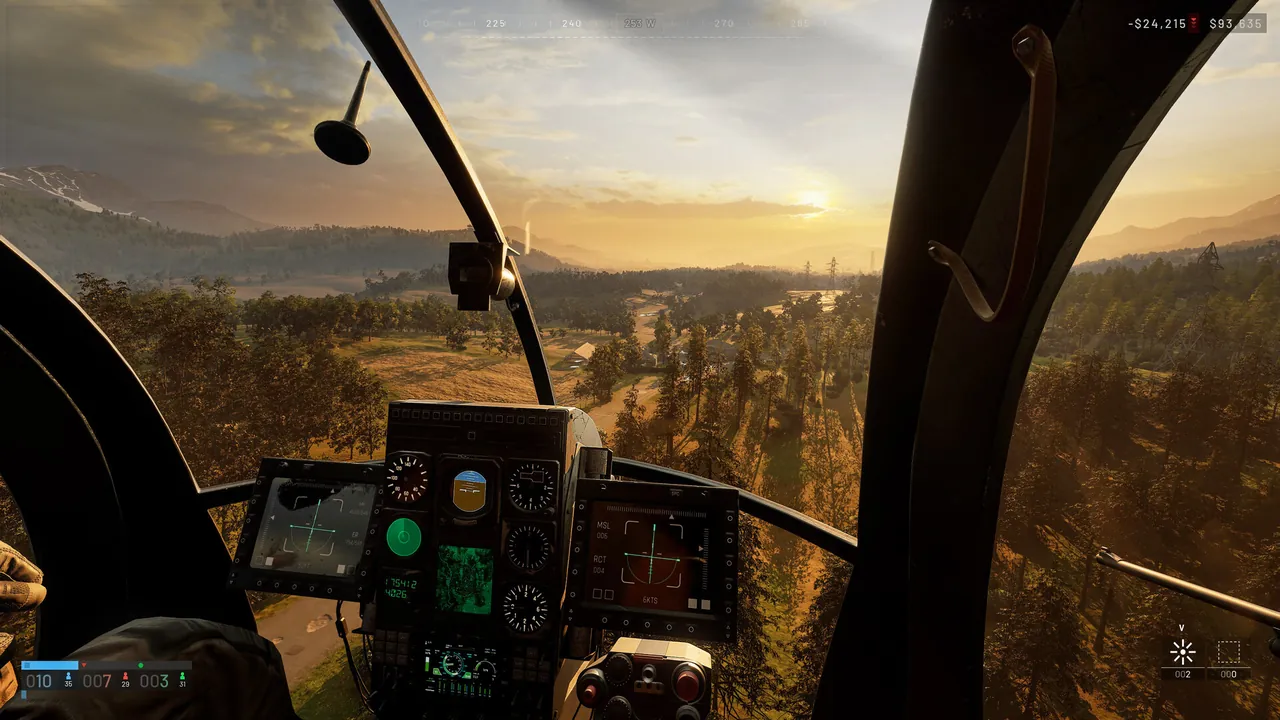
| Supply runs | Confirmed paid | Logistics missions, particularly by helicopter |
| Kills | Confirmed paid | Paid, but framed by the developer as one income source among several |
| Exact payout figures | Not published | Will be documented here from the live build |
Team17's own summary of the game — “teamwork pays and cash is king” — is not marketing filler. It is a literal description of the incentive structure. The economy is built so that you do not have to choose between doing what helps your team and doing what advances you personally.
What dying actually costs
A point that trips up new players: death does not confiscate your money. If you are carrying $40,000 and die, you still have $40,000. What you lost is the specific equipment you had bought and were holding.
So the real cost of dying is re-equipment plus lost time:
- Dying in a $1,500 infantry kit costs you $1,500 and a respawn.
- Dying in a tank you paid a large fraction of your balance for costs you that entire purchase, and it is gone permanently — nobody recovers it for you.
- Dying repeatedly at the same price point is what actually drains an account. Three deaths in expensive kits does what one death in a tank does.
Which is why the survivability items — armour, a medical kit, cover from a built position — are economic purchases as much as tactical ones. Staying alive is not just about your kill/death ratio; it is your burn rate.
The match economy curve
Matches have a natural financial shape, and understanding it tells you when to spend.
- Opening — everyone is poor All 100 players have $10,000 and nobody can afford armour. This is the phase where a medical kit is disproportionately powerful: revives are cheap for you to provide and extremely valuable to a team that cannot replace bodies expensively.
- Early middle — the first vehicles appear The players who banked instead of splurging start fielding light vehicles and APCs. Transport becomes available, which changes how quickly everyone reaches the zone.
- Middle — fortification Forward operating bases go up. Anti-air emplacements make helicopter approaches costly. The fight over the zone stabilises into something that looks like a siege.
- Late — heavy armour and artillery The best-earning players can now field tanks and artillery vehicles, and anti-armour becomes a necessary purchase rather than a specialist one. Destroying an enemy tank here is a serious economic attack, not just a kill.
How to afford a tank
There is no trick, only sequencing:
- Run cheap for the opening lives. Rifle, armour, medical kit. Take every revive you can reach.
- Stay in the zone. Zone presence pays continuously in a way that hunting does not. It is also, conveniently, how your team wins.
- Take transport work when nobody else will. Buying a light vehicle early and running squads to the zone is one of the more reliable earners available to a low balance.
- Buy armour only when you can survive losing it. The test is simple: if losing this purchase would force you back into the cheapest possible kit for the next several lives, you cannot afford it yet, regardless of what the balance says.
A useful heuristic: never spend more than you can rebuild in roughly two productive lives. That keeps a bad engagement from turning into a ten-minute recovery, and it is the difference between a player who fields a tank once and a player who fields one repeatedly.
This is not monetisation
Because WARDOGS looks like a live-service game and has an in-game currency, people reasonably assume cash can be bought. It cannot. The economy is a round-based gameplay mechanic that resets every match. There is no announced real-money store, no currency purchase and no battle pass. The paid Supporter Edition adds cosmetics only. Every player sits down to the same $10,000.
Economy FAQ
How do you earn money in WARDOGS?
Reviving allies, holding and contesting the Control Zone, transporting team-mates, running supplies, and kills. Support play is designed to be financially competitive with fragging.
How much cash do you start with?
$10,000, at the start of every match.
Do you lose your money when you die?
No. You lose the equipment you were carrying. Your banked balance stays, but you have to spend from it again to re-equip.
Does cash carry over between matches?
No. Every match starts fresh at $10,000.
What is the fastest way to earn cash in WARDOGS?
Cheap kit plus paid team actions, sustained. Revive constantly, hold the zone, take transport work. Expensive gambles early are the slowest route because losing them resets your earning capacity.
Can you buy cash with real money?
No. There is no real-money currency purchase in WARDOGS.
Sources: the official Steam store page ($10,000 starting balance, per-life purchasing, confirmed paid teamplay actions) and Team17's published description of the game. Payout values and the phase analysis are flagged as unpublished or as this wiki's own reasoning — see the editorial policy. Back to all guides.