
Building and Destruction in WARDOGS
Answer
Yes, you can build in WARDOGS, and yes, you can destroy buildings — but destruction is deliberately capped. Players can deploy a forward operating base anywhere on the map and construct mortar stations, anti-air emplacements and sniper towers. Tanks can blow holes through walls and rocket launchers can demolish cover. BULKHEAD tested unrestricted destruction internally, found it flattened an entire map within an hour and made level design meaningless, and shipped a controlled version instead.
Forward operating bases
The FOB is the most strategically important thing a player can buy in WARDOGS, and it has very little to do with combat.
Recall the geometry: the map is 16×16 km and the Control Zone is a 2×2 km square somewhere inside it. Points go to the team with the most bodies on that square. The binding constraint on headcount is therefore not how well your team fights — it is how fast a dead player can get back.
A forward operating base deployed near the zone collapses that travel time. One player spending money on a FOB improves the respawn logistics of everyone on the team, repeatedly, for the rest of the match. In scoring terms it is frequently worth more than a tank.
Where to place a FOB
- Close enough to matter. If the run from the FOB to the zone is longer than the run from the default deployment, it has achieved nothing.
- Not visible from the zone. This is the mistake. A forward base within line of sight of the Control Zone is a base that gets found in the first minute and then attracts every mortar and artillery shell on the map. Use terrain — reverse slopes, treelines, the far side of industrial structures.
- Behind, not beside. A FOB placed on the flank between two enemy factions serves both of them a target. Place it on the approach your team already controls.
- Account for the third team. A position that is safe from one enemy faction may sit directly on the other's rotation. In a three-team game, “behind our lines” is a weaker concept than it sounds.
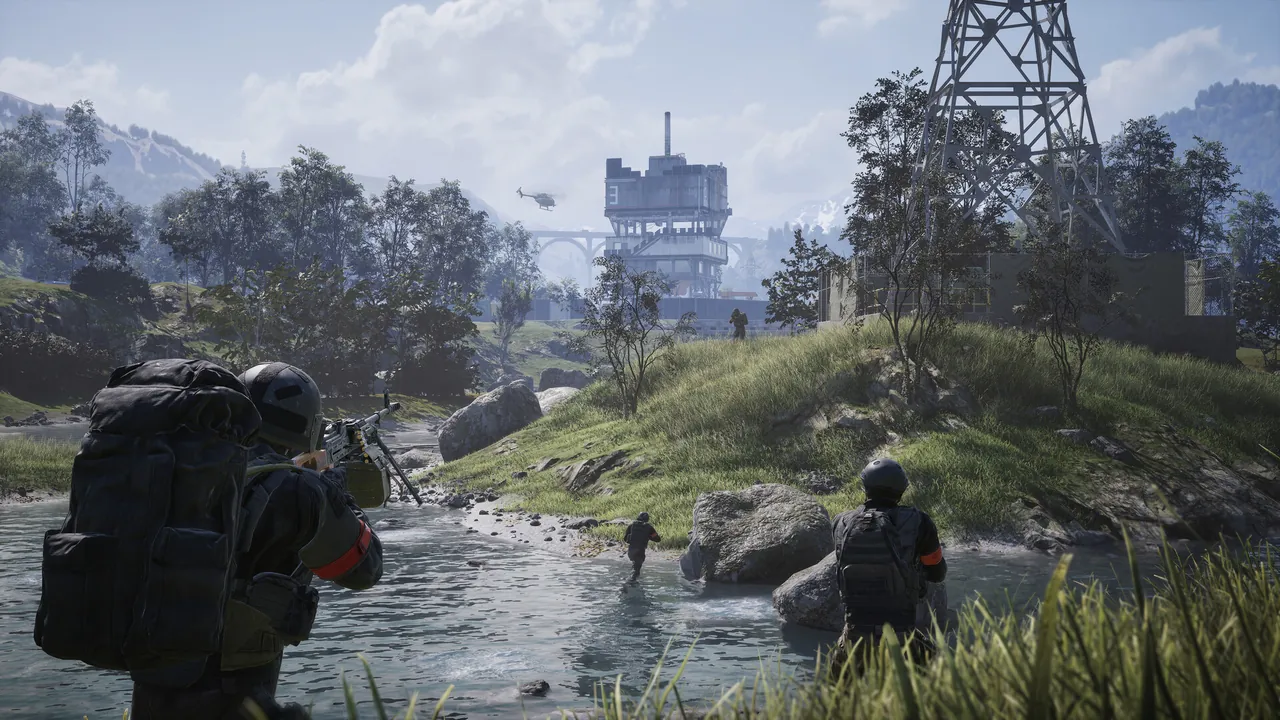
What you can build
| Structure | Purpose | Best used |
|---|---|---|
| Forward operating base | Deployable anywhere on the map; the anchor for a team's presence near the zone | Early, near the zone, out of sight of it |
| Mortar station | Indirect fire onto positions you cannot see | Against dug-in defenders and enemy fortifications; behind cover, since it advertises its position |
| Anti-air emplacement | Denies helicopter approaches | On open zone terrain, where the enemy has to fly in rather than drive |
| Sniper tower | Elevated firing position over the zone or its approaches | Valley and river zones with long sightlines; a liability in villages where it is easily flanked |
Everything you build is destructible. Fortifications are not permanent cover — they are cover that costs the enemy something to remove. An artillery vehicle exists specifically to level them from outside the zone, which is why a mortar station that has been firing for two minutes without moving is on borrowed time.
How much can you actually destroy?
This is one of the more interesting design decisions in the game, and BULKHEAD has been unusually candid about it.
The studio built full-scale destruction and tested it internally. The result was that players flattened the entire map within about an hour. With every building gone, level design stopped existing: no cover, no sightline structure, no reason for any part of the terrain to be shaped the way it was. The whole map converged on the same featureless fight.
So the shipping version keeps destruction controlled. What is confirmed:
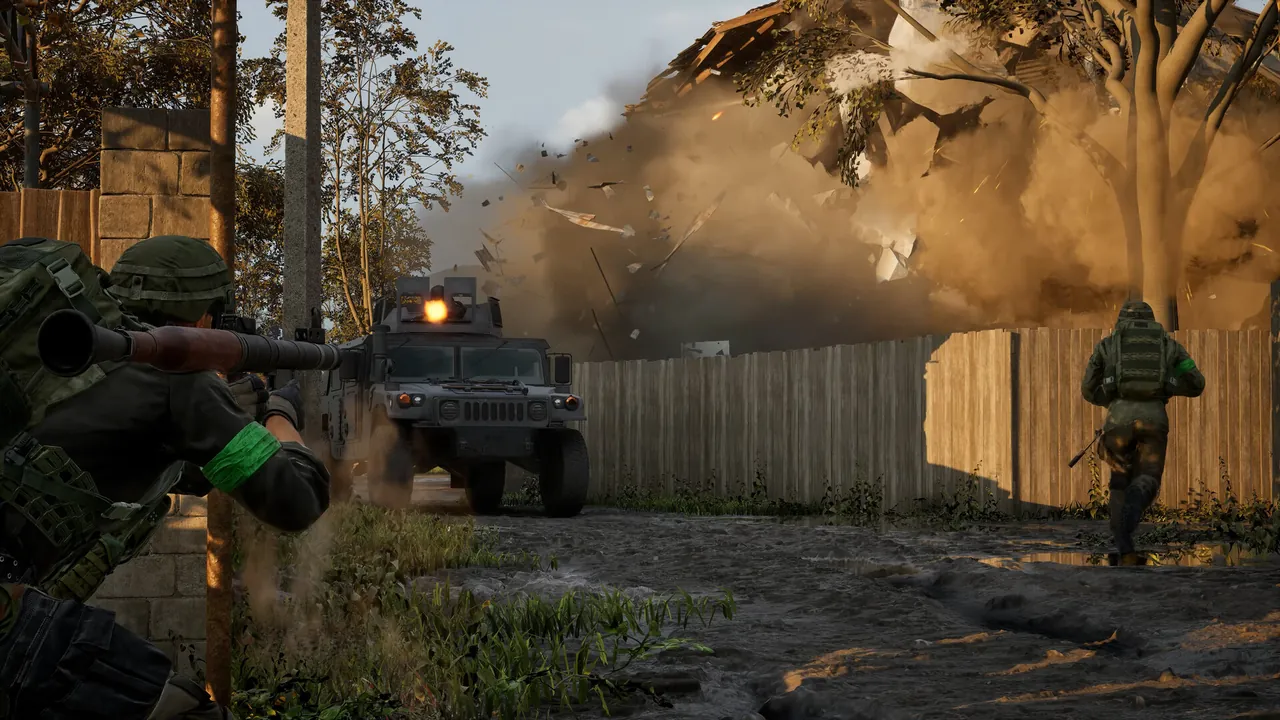
- Tanks can blow holes through walls. Buildings are penetrable, not indestructible.
- Rocket launchers can demolish cover. A defender behind a wall is not permanently safe.
- Artillery can level fortifications. Player-built structures are explicitly targets.
- The map does not get flattened. Destruction is capped so terrain and level design survive a full match.
The tactical read: destruction in WARDOGS is a tool for opening a specific problem — a defended building, a fortified position, a wall between you and the zone — rather than a way to reshape the battlefield wholesale.
Countering enemy construction
- Artillery vehicles are the purpose-built answer. Crewed heavy weapons that rain fire onto the Control Zone, level fortifications and punish clustered defenders.
- Mortar stations do the same job at a lower price point, from your own built position.
- Anti-armour weapons handle fortifications as well as vehicles — the rocket launcher you bought for a tank works on a sniper tower.
- Finding the FOB is often more valuable than fighting the players it produces. A destroyed forward base restores the travel-time problem for the entire enemy team.
What is not yet confirmed
Not published by BULKHEAD: the cost of each structure, build times, whether construction requires resources beyond cash, limits on how many FOBs a team can field, whether structures can be repaired, and the full list of buildable objects. These will be documented here once they can be verified in the Early Access build from 10 September 2026 rather than estimated from trailer footage.
Building FAQ
Can you build in WARDOGS?
Yes. Players can deploy a forward operating base anywhere on the map and build mortar stations, anti-air emplacements and sniper towers.
Can you destroy buildings in WARDOGS?
Partly. Tanks can breach walls and rocket launchers can demolish cover, but destruction is capped so the map is not flattened. BULKHEAD removed full destruction after internal testing showed it erased level design within an hour.
Where should I put a forward operating base?
Close enough to the Control Zone to shorten the run in, but out of line of sight from the zone itself. A visible FOB attracts artillery.
What can you build in WARDOGS?
Confirmed: forward operating bases, mortar stations, anti-air emplacements and sniper towers.
Can enemies destroy your buildings?
Yes. Artillery vehicles are described specifically as levelling fortifications, and anti-armour weapons work on structures.
Is WARDOGS a building game?
No. Building is a support system inside a shooter, not the core loop. It exists to solve travel time and to create cover on a 256 km² map.
Sources: the official Steam store page (base building and destruction), BULKHEAD's public comments on cutting full-scale destruction after internal testing, and Team17's Level Design & Performance developer video. Placement advice is this wiki's own analysis. Back to all guides.